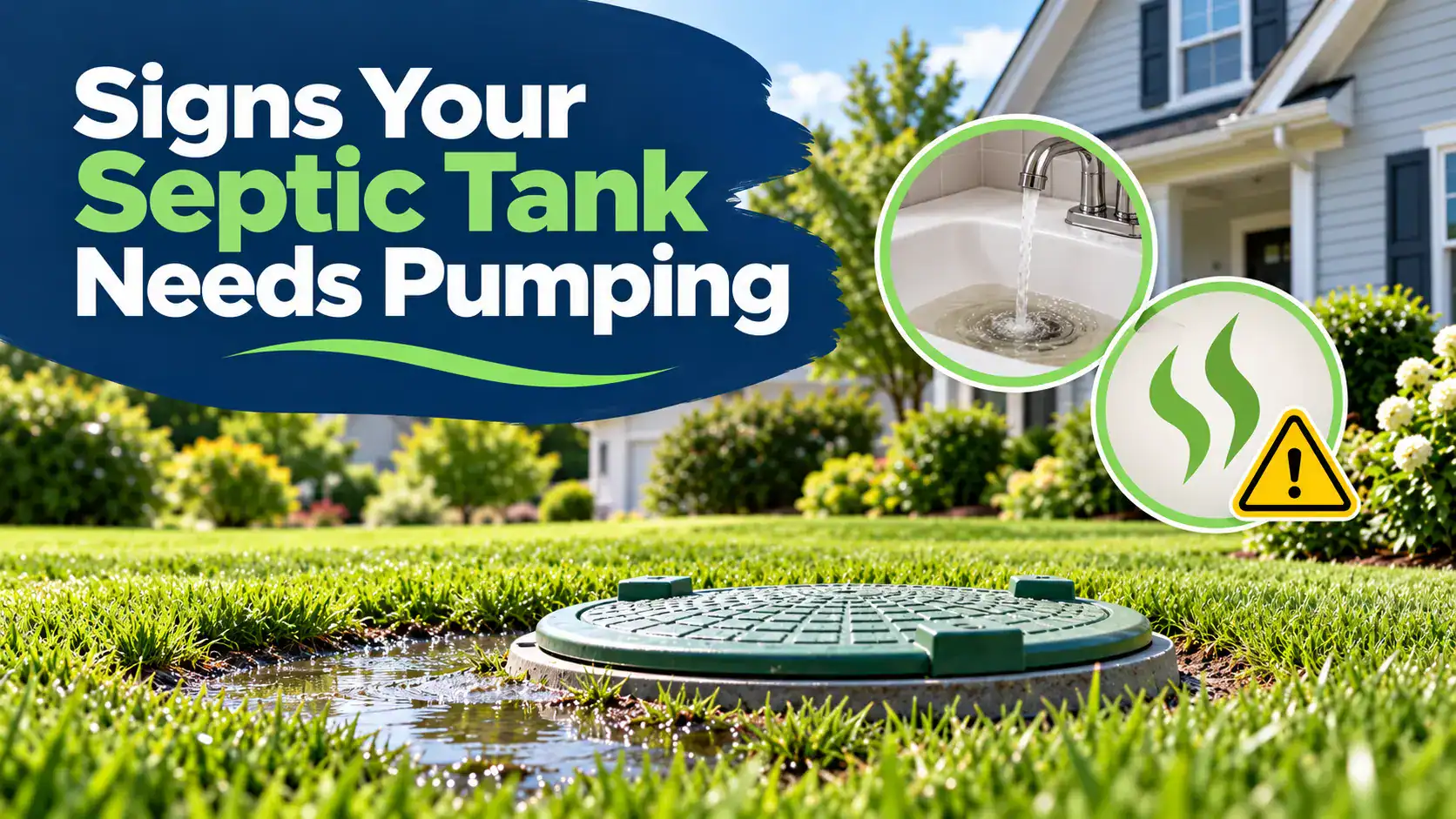
The signs your septic tank needs pumping usually show up in your plumbing and your yard before the system fails. Slow drains, gurgling pipes, odors, and wet spots near the tank or drainfield are all warning signs. This guide lists them, explains why they matter, and covers what to do next.
At a glance
- Slow drains, gurgling pipes, sewage backups, odors, and standing water are the main warning signs.
- A full tank is only one possible cause, so ask a septic professional to inspect the system.
- Do not open the tank or go inside it. The gases can be deadly.
- If you cannot remember your last pump-out, schedule an inspection.
Warning signs of a septic problem
The Texas Water Resources Institute lists five signs of septic system trouble:
- Standing water or damp spots near the septic tank or drainfield.
- Slow drains. Tubs, showers, and sinks that empty slowly.
- Backups. Water and sewage coming back up through toilets, drains, and sinks.
- Gurgling sounds in the plumbing.
- Bad odors around the tank or drainfield.
One of these signs on its own is worth a call. Several together mean you should not wait.
Why a full tank causes these signs
Inside a septic tank, solids settle to the bottom as sludge and grease floats to the top as scum. Oregon State University Extension explains that when too much sludge builds up, solids no longer settle out before the wastewater reaches the soil. They can then clog and damage the soil absorption area, the part of the system that treats the liquid. When that area stops taking water, you see the signs above: wet ground, slow drains, and backups.
A full tank is not the only cause
The same symptoms can come from a damaged baffle, a clogged pipe, or a drainfield that is already stressed. Pumping alone may not solve those problems. That is why the EPA says septic inspections and pumping should be done by a septic service professional. Describe what you noticed when you call, and ask them to inspect the system rather than only pump it.
What to do first
- Go easy on water use. The Texas Water Resources Institute says several laundry loads in one day can overload a system, so spread out laundry until the system has been checked.
- Note what you see. Write down which drains are slow, when you hear gurgling, and where the damp spots are.
- Find your records. The date of the last pump-out and the tank size help the technician.
- Call a septic service professional. Describe the signs and ask for an inspection. Use our state directory to find listed companies.
- Do not drive or park on the drainfield. The EPA advises against it.
Do not open the tank to look
Oregon State University Extension warns never to enter a septic tank. It produces toxic gases that can kill within minutes. Leave inspection of the inside of the tank to a licensed professional.
Habits that cause septic problems
Some of the warning signs trace back to everyday habits. The Texas Water Resources Institute warns that:
- Wet wipes do not break up in a septic system and can cause blockages and sewage overflow.
- Running several laundry loads in one day can overload the system.
- Fats, oils, and grease build up as scum in the tank.
- Many septic additives have not been proven to help, and they can stir settled particles back into the liquid.
The EPA also advises flushing only human waste and toilet paper. See our guide on how often to pump a septic tank for the other factors that set your schedule.
When there are no signs at all
Silence from the system does not mean it is healthy. The EPA says that if a system has not been pumped for years and shows no problems, it may mean wastewater is leaking underground or solids are moving toward the drainfield. A routine inspection catches these things early. The EPA recommends inspecting an average household system at least every three years. Read the EPA’s page on why septic maintenance matters for the risks of waiting.
Keep notes for the inspector
When a warning sign appears, write down when it started, which drains or fixtures are affected, whether it rained recently, whether an alarm has sounded, and the date of the last pump-out if you know it. These details help a septic professional tell a single clogged pipe from a wider system problem. They also show whether pumping is the likely fix or whether the cause is somewhere else, such as a baffle, a filter, a pump, or the drainfield.
If sewage is backing up into the house or rising to the ground, use our emergency septic pumping page to find companies listed as open 24 hours on Google.
Find a septic pumping company near you
Browse listed septic pumping companies by state, county, and city. Check ratings, reviews, and hours, then call to confirm availability for your property. The septic tank pumping cost guide explains what changes an estimate.