
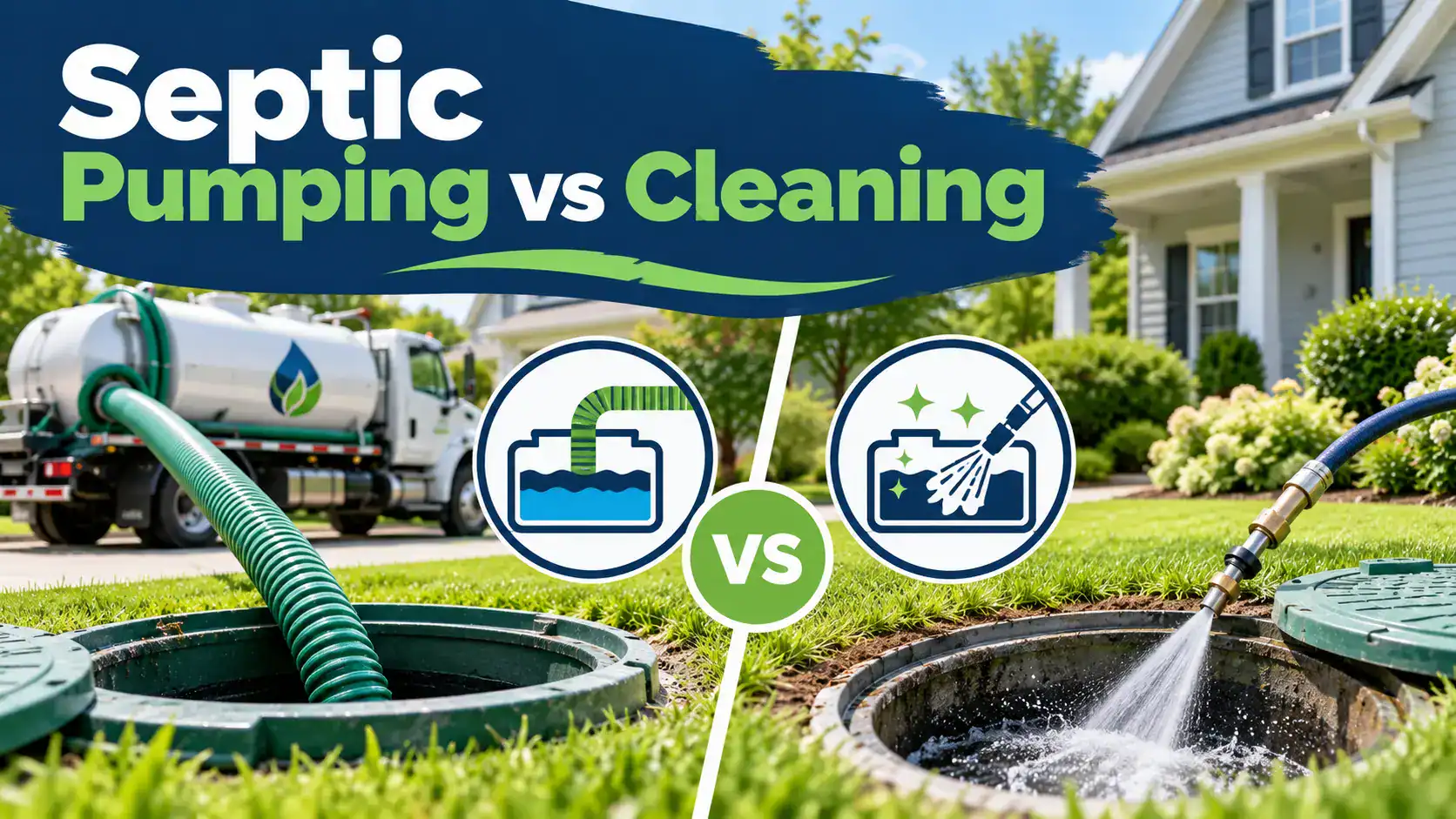
Septic pumping removes the sludge and scum that collect in the tank, while cleaning is described as a more thorough procedure that also breaks up the scum layer before the material is removed. Companies do not always use the two words the same way, so it helps to know the difference before you book. This guide explains each service, what to ask, and what you do not need to pay for.
At a glance
- Pumping removes the material that collects in a septic tank, called septage.
- Cleaning is more thorough. Material is alternately siphoned out and reinjected to break up the scum layer.
- Baffles should be checked before the tank is closed, and damaged ones replaced.
- Additives are not needed to help settling or decomposition.
What septic pumping is
Pumping empties the tank. The material that comes out, septage, is made up of the settled solids at the bottom (sludge) and the scum that floats on top. According to Oregon State University Extension, these solids have to be pumped periodically. If sludge builds up too far, solids stop settling out before the wastewater reaches the soil, and they can damage the soil absorption area.
Pumping is the routine job most homeowners need every few years. The EPA says most household tanks are pumped every three to five years. See how often to pump a septic tank for the details.
What septic cleaning is
Oregon State University Extension describes cleaning as a more thorough procedure. The contractor works through the large central manhole and alternately siphons liquid out of the tank and reinjects it into the bottom. This stirs up the sludge and breaks up the scum layer so both can be removed. Before the tank is closed, the baffles are checked, and any that are missing or deteriorated are replaced.
Oregon State describes cleaning as the more thorough of the two, so the practical question is how complete the job is. Ask what a company’s visit actually includes.
Pumping versus cleaning at a glance
| Pumping | Cleaning | |
|---|---|---|
| What it removes | Septage: settled sludge and floating scum | Sludge and scum, after they are loosened by siphoning and reinjecting |
| Scum layer | Not described as part of pumping | Broken up so it can be removed |
| Baffle check | Ask whether it is included | Part of the procedure described by Oregon State |
| Who describes it | EPA and Oregon State Extension | Oregon State Extension |
Some companies call their standard visit “pumping” and others call it “cleaning”. The table shows what the procedures are described to include. Always confirm what the company means by the name on the estimate.
Questions to ask before you book
- Is the whole tank emptied, including every compartment?
- Will the sludge be loosened and the scum layer removed?
- Will the baffles and the condition of the tank be checked?
- Is the effluent filter cleaned if my tank has one?
- Will I get a written record of the visit?
The University of Maryland Extension says an effluent filter, when present, should be cleaned or replaced annually by a professional. Ask whether that is part of the service or a separate charge. Our septic tank pumping cost guide lists other extras to ask about.
Pumping is not the same as an inspection
An inspection checks the condition of the system. The EPA recommends that the average household system be inspected at least every three years by a septic service professional, and pumped every three to five years. Some visits combine both, but they are separate jobs, and the inspection tells you when pumping is due.
What you do not need to pay for
Oregon State University Extension says biological and chemical additives are not needed to help settling or decomposition. Pump-out guidance hosted by the EPA says miracle additives do not improve septic system function, and that septage should not be left behind to “seed” the tank. If a company tries to sell you an additive as part of the service, ask why.
Which service do you need?
If your system is on a regular schedule and you have no warning signs, a standard pump-out is usually what is needed. If it has been years since the last service, if you see signs of a septic problem, or if you want the scum layer dealt with, ask the company whether a more thorough cleaning is appropriate for your tank. A professional who has inspected the system is the best person to tell you.
Common mistakes to avoid
- Choosing by the service name. Companies use “pumping” and “cleaning” differently, so compare what each quote says will be removed and inspected.
- Waiting for a backup. A backup or wet ground can mean a problem beyond solids in the tank. Schedule routine service before symptoms appear. Our signs guide explains what to watch for.
- Counting on additives. Oregon State University Extension and University of Maryland Extension both say additives are not needed or do not help, so they are not a replacement for pumping.
Keep records after every visit
Keep the service date, the inspection notes, the work performed, any repairs, and the company’s advice on the next visit. A clear history helps the next company and the next owner understand how fast your tank fills. For the full sequence of a visit, read how septic tank pumping works.
Find a septic pumping company near you
Browse listed companies by state, county, and city. Check ratings and hours, then call and ask what the visit includes. For a walk-through of the visit itself, read how septic tank pumping works.