These septic pumping FAQs answer the questions homeowners ask most often, with each answer based on guidance from the EPA and university extension services. Use the answers below to plan pumping, spot problems early, and know what to ask a company. Each answer links to a full guide if you want more detail.
How often should a septic tank be pumped?
Most household septic tanks are pumped every three to five years, according to the EPA. Household size, the amount of wastewater, the solids in it, and the size of the tank all change that interval. Read the full guide on how often to pump a septic tank.
How often should a septic system be inspected?
The EPA recommends that the average household system be inspected at least every three years by a septic service professional. Systems with electrical parts, such as pumps or alarms, generally need attention once a year.
What are the signs that a septic system has a problem?
The Texas Water Resources Institute lists standing water or damp spots near the tank or drainfield, slow drains, sewage backing up into the home, gurgling sounds in the plumbing, and bad odors. See the signs your septic tank needs pumping.
What should never go down the drain or toilet?
The EPA says to flush only human waste and toilet paper. Wipes, grease, coffee grounds, cat litter, paper towels, medications, and household chemicals should stay out of the system.
Do septic additives help?
Oregon State University Extension says biological and chemical additives are not needed to help settling or decomposition. The Texas Water Resources Institute adds that many have not been proven to help and may stir settled particles back into the liquid.
What happens during a septic pump-out?
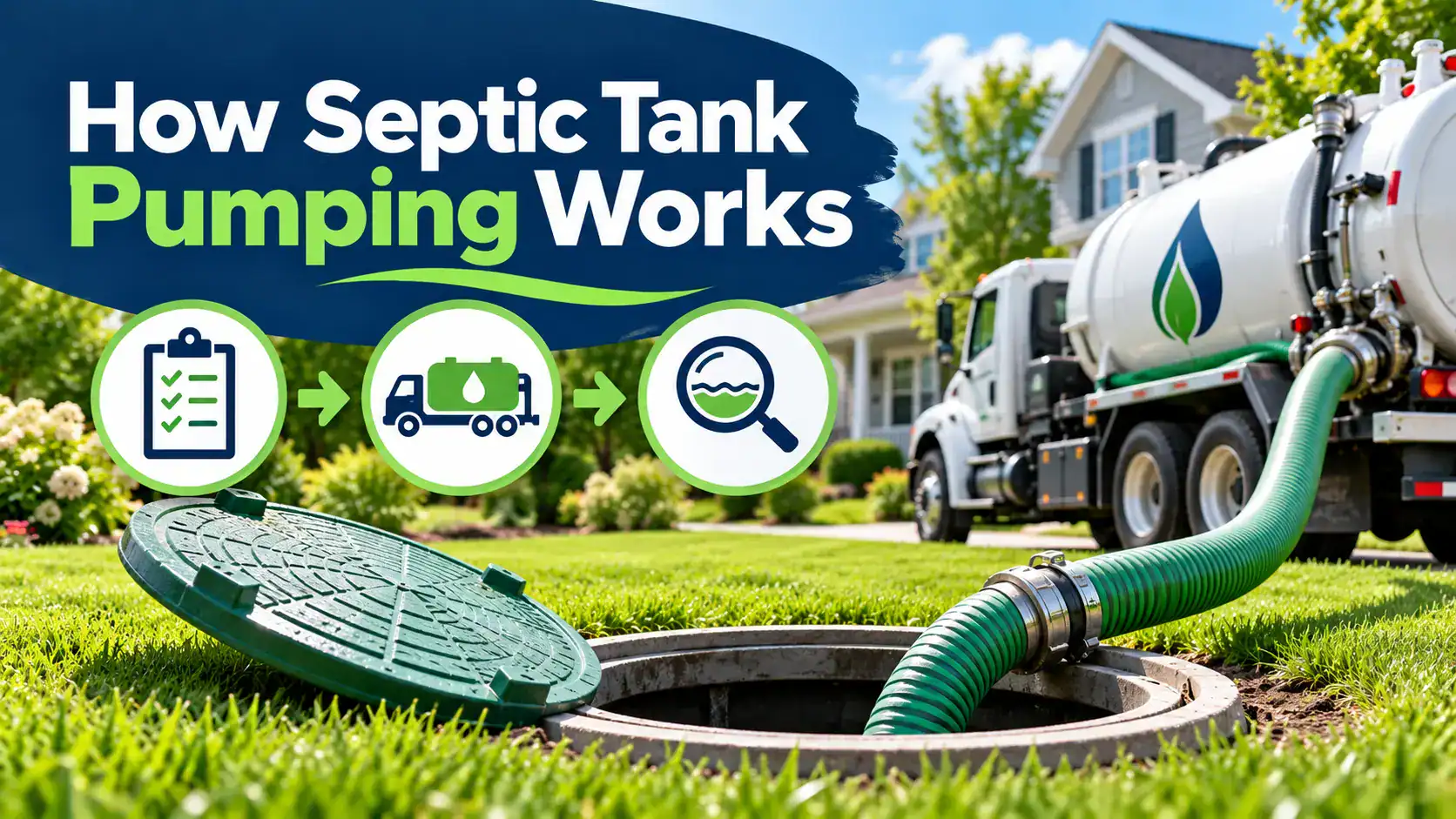
The contractor notes the liquid level, pumps the tank through the large central manhole, loosens the settled sludge, and inspects the tank and baffles before closing it. See how septic tank pumping works for the steps.
Is septic pumping the same as septic cleaning?
Not always. Pumping removes the sludge and scum that collect in the tank. Oregon State University Extension describes cleaning as a more thorough procedure that siphons out and reinjects material to break up the scum layer. Read septic pumping vs cleaning and ask each company what its service includes.
Does a garbage disposal change how often I need pumping?
Yes. Cornell Cooperative Extension says a disposal greatly increases solids loading, so the tank must be pumped more often. The Texas Water Resources Institute says pumping may be needed one to two years sooner.
Can I drive or park over the drainfield?
No. The EPA advises against driving or parking on the drainfield. It also says to keep roof drains and sump pumps pointed away from it.
Is it safe to open or enter my septic tank?
No. Oregon State University Extension warns that a septic tank produces toxic gases that can kill within minutes. Leave access to the inside of the tank to a licensed professional.
How do I find where my septic tank is?
Check your permit or system records first. The University of Maryland Extension notes that the county health department keeps records of permitted systems and can give location information on request. Ask a septic professional if you cannot find them.
How much does septic tank pumping cost?
Cost depends on the size of the tank, its location, and what the visit includes. Our septic tank pumping cost guide shows published estimates by tank size and explains the extras to ask about.
How do I find a septic pumping company near me?
Browse listed companies by state, county, or city on this site. Check Google ratings, reviews, and hours, then call to confirm that the company serves your property and what the visit includes.
Can I use water while my septic tank is being pumped?
Follow the technician’s instructions. In general it makes sense to hold laundry, dishwasher loads, and long showers during the visit, so new wastewater does not enter the tank while it is being emptied. Ask when you book, because practices differ between companies. Read more: how pumping works.
Should I keep using water if my septic system is backing up?
No. Hold laundry, dishwasher loads, and long showers, and keep children and pets away from any sewage, which can carry disease-causing germs. A backup can have causes other than a full tank, so have a septic professional find the cause. Read more: emergency septic pumping.
What records should I keep after a pump-out?
Keep the service date, the company, what the technician found in the sludge and scum layers, the condition of the baffles, any repairs, and the suggested date for the next inspection. Store them with your permit and system drawings.
Find a septic pumping company near you
Browse listed septic pumping companies by state, county, and city, then call to confirm availability for your property.